


Decorative Concrete Trends in Houston: What Architects and Landscape Architects Are Specifying in 2026
Why Decorative Concrete Is Leading Design Conversations Across Houston
Across Houston, architects and landscape architects are being asked to design spaces that can do more.
They need to be durable enough for heavy public use, refined enough for hospitality and commercial environments, flexible enough for civic and educational projects, and practical enough to perform in Houston’s heat, humidity, rain, and high-traffic conditions.
That is one reason decorative concrete is becoming a more strategic material choice across the Houston market.
For commercial, municipal, education, hospitality, multifamily, and public-realm projects, concrete is no longer being treated as a purely structural or utilitarian surface. In the hands of an experienced architectural concrete contractor, it becomes part of the design language of the space — shaping how people move, gather, enter, and experience a project.
At Bomanite Houston, we are seeing a clear shift toward concrete finishes that feel intentional, architectural, and long-lasting.
Trend 1: Exterior Hardscapes That Feel Designed, Not Default
Houston’s outdoor spaces are working harder than ever.
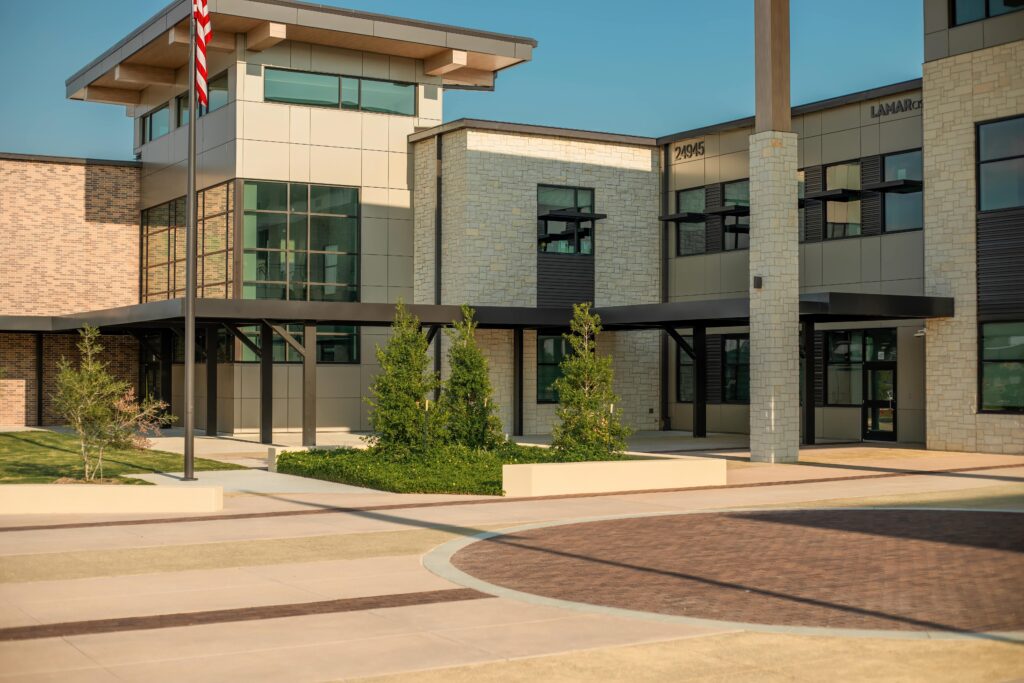
From civic plazas and school campuses to mixed-use developments, restaurant patios, retail centers, parks, and pedestrian corridors, exterior surfaces have to handle constant use while still supporting the overall design vision.
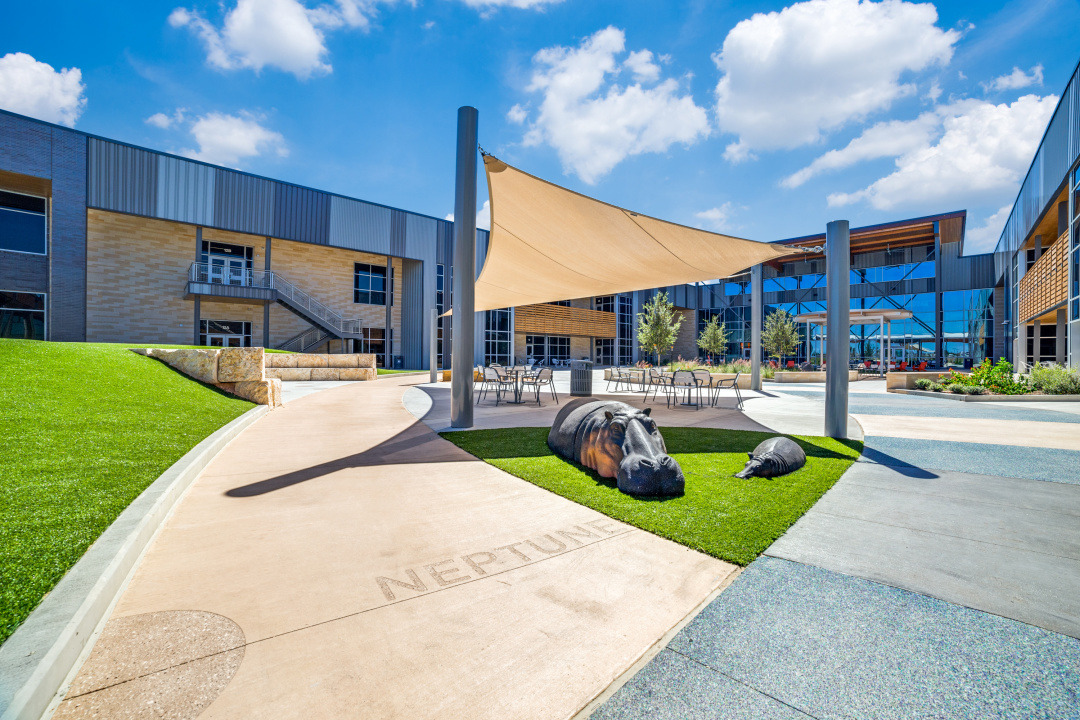
Architects and landscape architects are increasingly moving away from plain gray paving and toward decorative concrete systems that bring texture, color, pattern, and visual interest to exterior environments.
Decorative concrete can help create:
– More refined pedestrian walkways
– Durable plaza and courtyard surfaces
– Hospitality patios with a more finished feel
– School and campus entries with stronger visual identity
– Public spaces that feel cohesive and intentionally designed
For Houston projects, the goal is often not just durability. It is durability with design value.
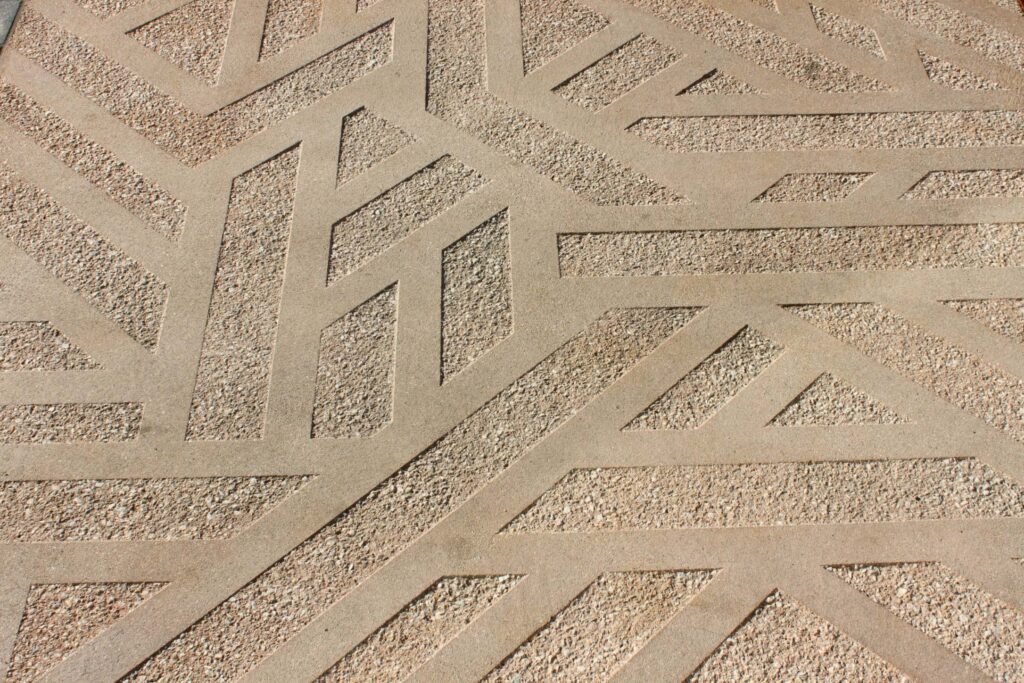
Trend 2: Sandscape and Exposed Aggregate Finishes for High-Traffic Public Spaces
In a climate like Houston’s, exterior materials need to be selected with long-term performance in mind.
Sandscape, exposed aggregate, and textured architectural concrete finishes are especially relevant for projects where slip resistance, durability, and appearance all matter. These finishes can provide a more natural, refined surface while still standing up to pedestrian traffic, weather exposure, and daily use.
For architects and landscape architects designing public-facing projects, these systems can offer a strong alternative to basic broom-finished concrete or more maintenance-intensive paving options.
They are especially useful for:
– Parks and trails
– School and university campuses
– Civic plazas
– Pool decks and amenity areas
– Commercial courtyards
– Restaurant and hospitality patios
– Mixed-use pedestrian zones
The result is concrete that feels appropriate for the architecture around it — not like an afterthought.
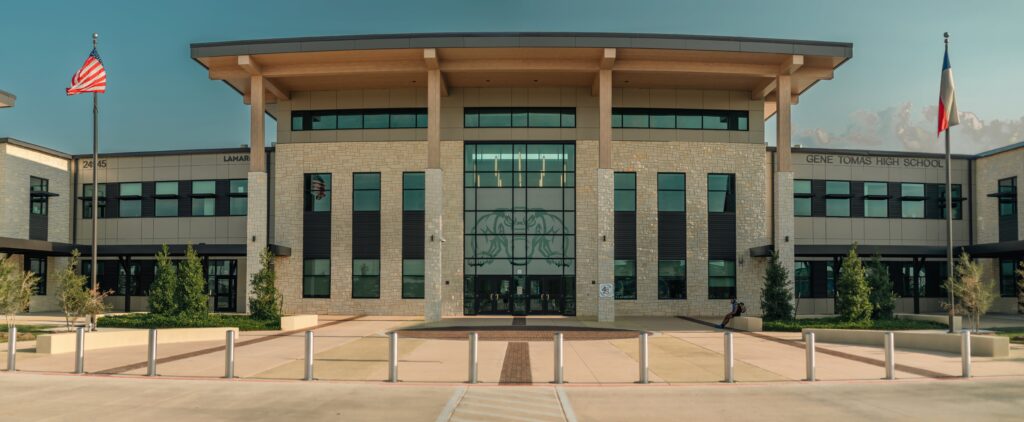
Trend 3: Warmer, More Natural Concrete Palettes
Across Houston, design teams are moving toward concrete finishes that feel warmer, softer, and more connected to the surrounding materials.
Rather than relying only on cool gray tones, many projects are incorporating earth-inspired color palettes, sand tones, subtle aggregates, and matte textures that pair well with brick, stone, wood, steel, glass, and landscape materials.
This is especially important in Houston, where outdoor spaces are often designed as extensions of hospitality, retail, residential, and institutional environments.
Warm decorative concrete finishes can help bridge the gap between architecture and landscape, creating surfaces that feel integrated rather than purely functional.
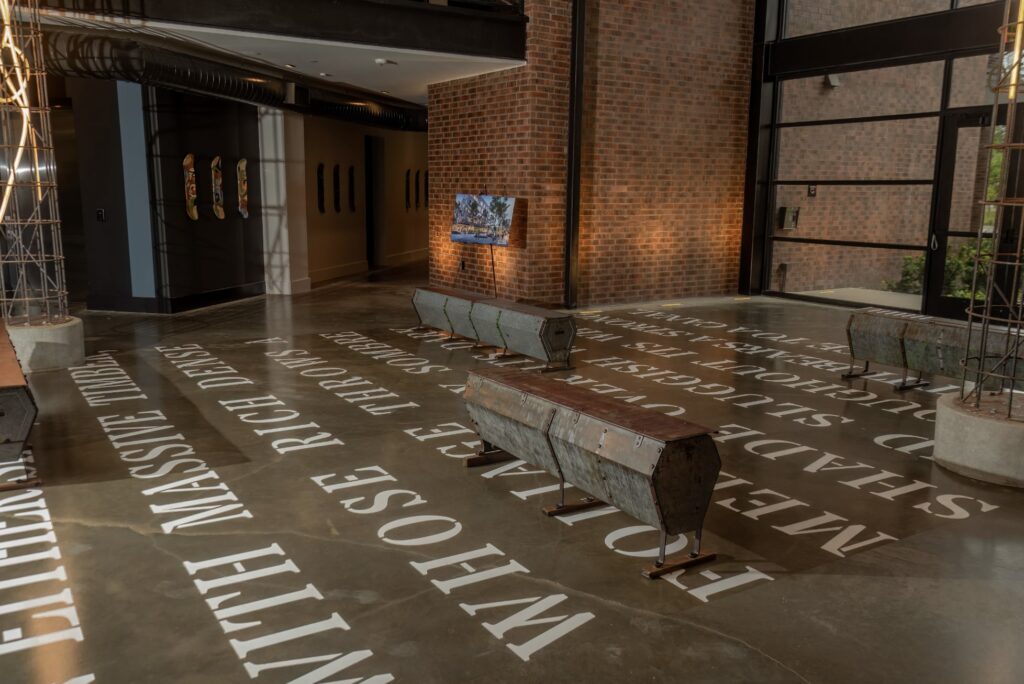
Trend 4: Custom Concrete for Branding, Wayfinding, and Identity
For many Houston projects, concrete is being used as more than a surface material. It is becoming a way to reinforce identity.
Through scoring patterns, color changes, specialty finishes, logos, borders, and custom details, decorative concrete can help guide movement and create memorable moments within a space.
This is especially valuable in environments such as:
– School entrances
– Municipal buildings
– Corporate campuses
– Healthcare facilities
– Retail and mixed-use centers
– Hospitality spaces
– Parks and public gathering areas
Custom concrete gives architects and owners a way to make large surface areas feel intentional without relying solely on signage, furniture, or landscape features.
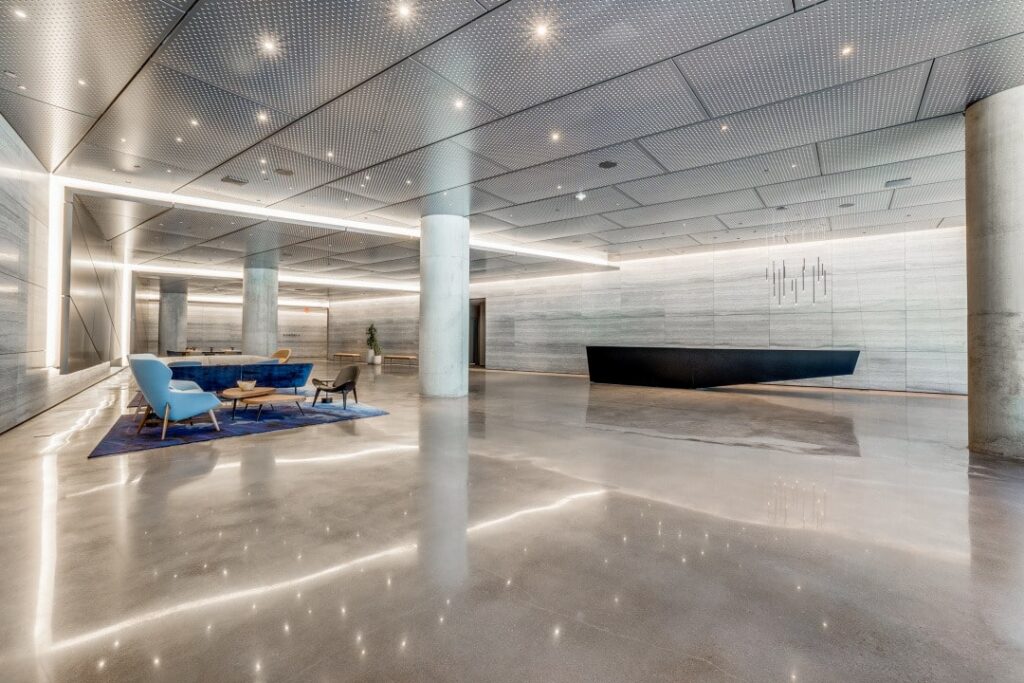
Trend 5: Durable Interior Concrete for Commercial and Institutional Projects
While exterior hardscape is a major opportunity in Houston, interior concrete is also continuing to gain traction.
Polished concrete and specialty interior finishes are being specified for commercial, education, retail, workplace, and public facilities because they offer a clean architectural look with long-term performance benefits.
For high-traffic interiors, polished concrete can support:
– Lower maintenance expectations
– A modern, refined appearance
– Long-term durability
– Better performance than many applied flooring materials
– A seamless look across large spaces
In Houston’s commercial and institutional market, this matters. Projects need finishes that can handle daily use without sacrificing the overall design intent.
Early Collaboration With Architects and Landscape Architects
One of the biggest shifts we are seeing is not just what gets specified, but when the conversation starts.
The strongest decorative concrete outcomes happen when Bomanite Houston is brought into the discussion early — while the architect, landscape architect, contractor, and owner are still evaluating finish options, budgets, installation realities, and long-term performance needs.
Early collaboration helps clarify:
– Which systems are best suited for the project
– How color and texture will perform in the field
– What finish options align with the design intent
– Where decorative concrete can create value
– How to balance budget, durability, and aesthetics
For Houston firms designing exterior hardscapes, civic spaces, campuses, public projects, and commercial environments, that early input can make a meaningful difference in the finished result.
Why Houston Architects Partner With Bomanite Houston
Bomanite Houston works with architects, landscape architects, general contractors, developers, municipalities, schools, and owners to deliver decorative concrete systems that align with both design vision and real-world performance.
From Sandscape and exposed aggregate systems to polished concrete, custom scoring, architectural hardscape, and specialty finishes, Bomanite Houston helps project teams think beyond standard concrete and create surfaces that feel intentional, durable, and design-forward.
Whether the project is a public plaza, school campus, restaurant patio, commercial courtyard, municipal facility, mixed-use development, or high-traffic interior, decorative concrete can help bring together form, function, and long-term value.
Planning a Houston-Area Project With Decorative Concrete?
If you are designing a Houston-area project that includes exterior hardscape, architectural paving, polished concrete, specialty concrete finishes, or custom concrete details, Bomanite Houston can help you evaluate the right system for your space.
Connect with Bomanite Houston to discuss finish options, samples, specifications, and early-stage project support.